
How to prepare the annual utility settlement for your tenants

Spring is on its way, and with it come the annual settlements from building managers and energy suppliers. How do you settle these costs with your tenants correctly and fairly?
Most lease agreements split the tenant's monthly payment into rent and advance payments for building services and utilities. That's why we prepare an annual settlement of the actual costs for our tenants. But definitely avoid the approach some landlords take when settling up: “I'll ask for any shortfall and keep any overpayment.” It's neither fair nor correct. On top of that, it does real damage to your relationship with the tenant.
We most often come across two situations. In the first, the tenant has been in the property for the whole year. This one is simpler, because you don't have to recalculate the costs for individual months. In the second, the tenant moved in during the year, either because the flat was being renovated or because a previous tenant lived there for part of the year. The calculations aren't easy, but I'll try to explain everything as clearly as I can.
Before we go through both cases, it's important to know when you'll receive which settlement from the building manager and the suppliers:
- Building manager: They must deliver the settlement for 2023 by 31 May 2024, but many send it as early as March.
- Gas: If the customer is a legal entity, it receives the 2023 settlement as early as January 2024. But if the meters are registered in the name of a private individual, you won't get the settlement until sometime in the summer of 2024.
- Electricity: Similar to gas, except that for a private individual the 2023 settlement doesn't arrive until the end of August 2024.
- Internet and TV: This one is more or less straightforward – you add up from the monthly invoices how much internet and TV cost you in total last year.
Electricity and gas costs are the hardest to calculate. You can, of course, wait until the summer for the exact figures, but I don't like waiting. If you're like me, you have two options:
The first option is to calculate the cost of consumption using the price per kWh of electricity and gas from the most recent settlement. With energy prices changing as they are today, this is the riskier option, but you won't lose any huge amount. If you don't want to take the risk, the second option is to ask the supplier for an extraordinary (interim) settlement as of the end of 2023. It costs a few euros and you get exact data. For both options you'll need the meter readings as of 31 December. So always ask the tenant for the water, gas and electricity meter readings at the end of the year.
1. The tenant lived in the flat for the whole year
If the tenant was in the flat for the whole of 2023, the settlement will be fairly simple:
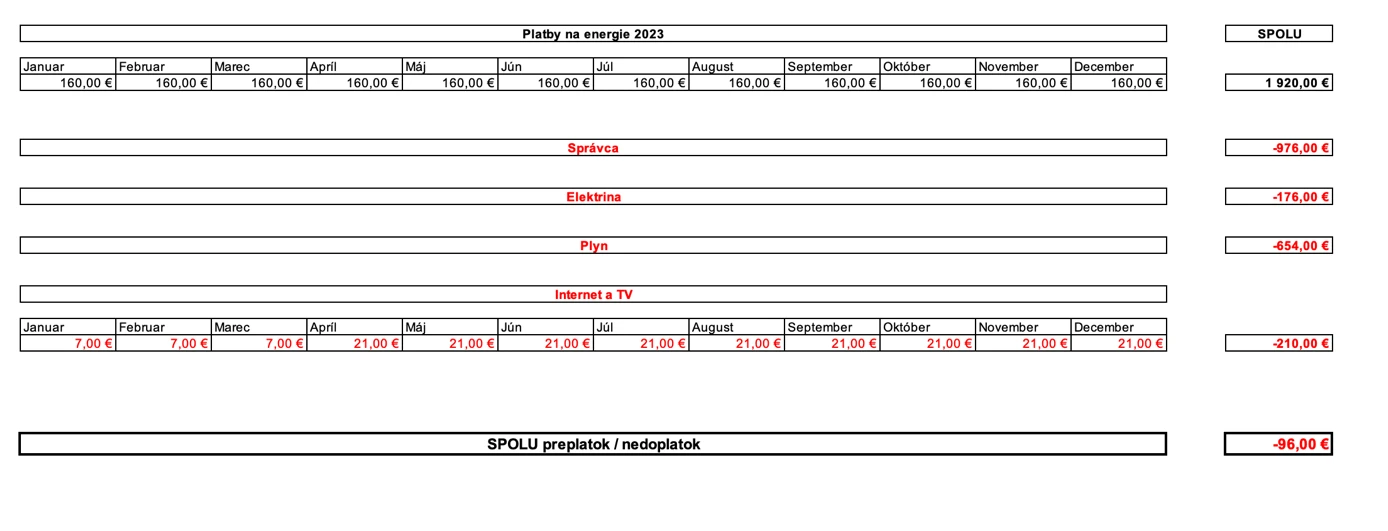
- Utility payments: This is the total of the advance payments the tenant sent you in 2023. Their amount may have changed during the year, which is why my table is broken down by month.
- Building manager: The total costs charged by the building manager for 2023. You'll find this figure in the building manager's settlement. If the tenant lived there all year, I don't even need to recalculate water consumption from the water meters – the entire 2023 cost belongs to the tenant.
- Gas: The total gas costs from the 2023 settlement.
- Electricity: The total electricity costs from the 2023 settlement.
- Internet and TV: The table above shows an example where the provider gave a discount for the first 3 months, after which I pay the standard price.
With gas and electricity suppliers, there's one more anomaly that can crop up. Their billing period may run, for example, from August 2023 to August 2024, and the settlement won't tell you what the costs were for 1 January – 31 December 2023. If you don't have an extraordinary settlement drawn up at the end of the year, we have to recalculate. I'll give an example of calculating electricity for 2022, since 2023 has not been settled yet. You would proceed in exactly the same way for gas.
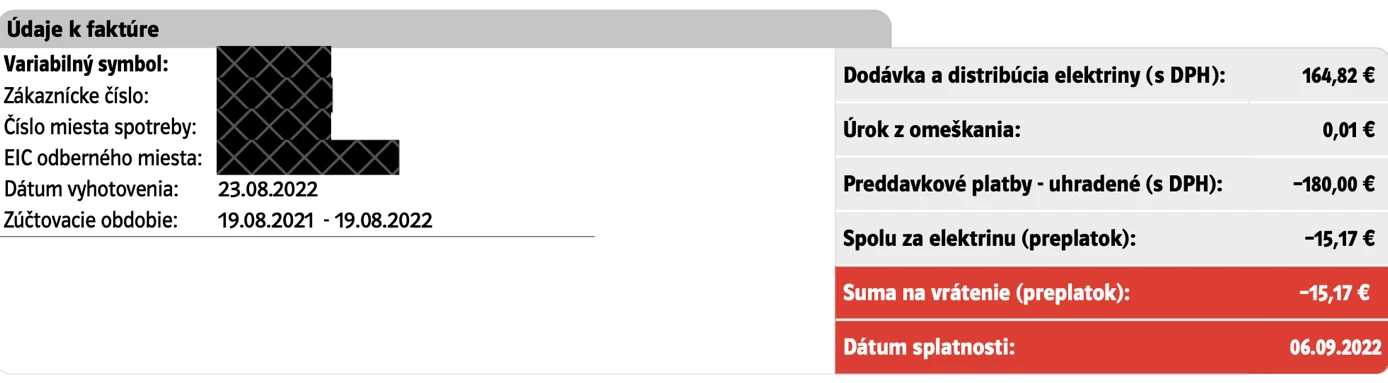
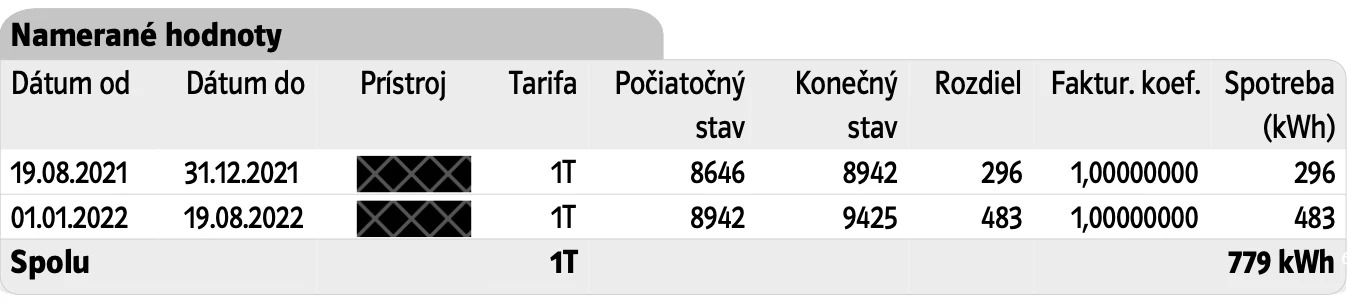
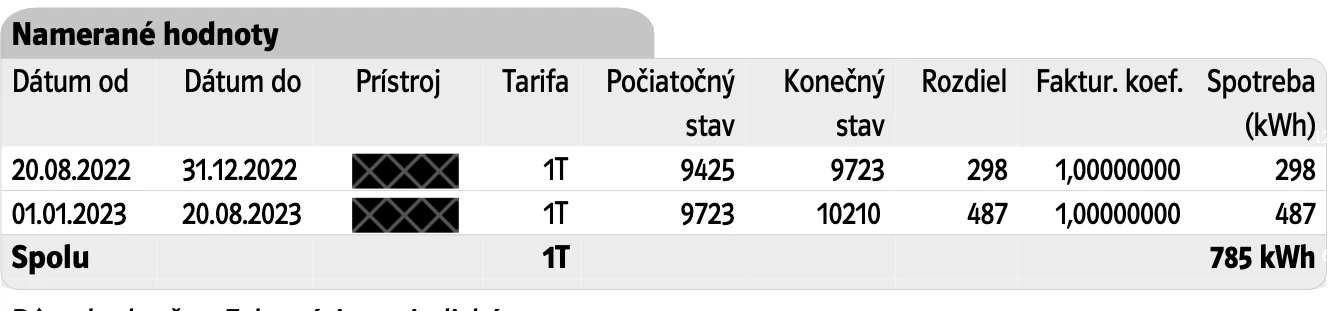
For the period August 2021 – August 2022, total consumption was 779 kWh and total costs were EUR 164.82. The price per kWh was therefore EUR 0.212. We're interested in 2022, so I multiply the price per kWh by the consumption in the period from 1 January 2022 to 19 August 2022, i.e. 483 kWh × EUR 0.212/kWh = EUR 102.40.
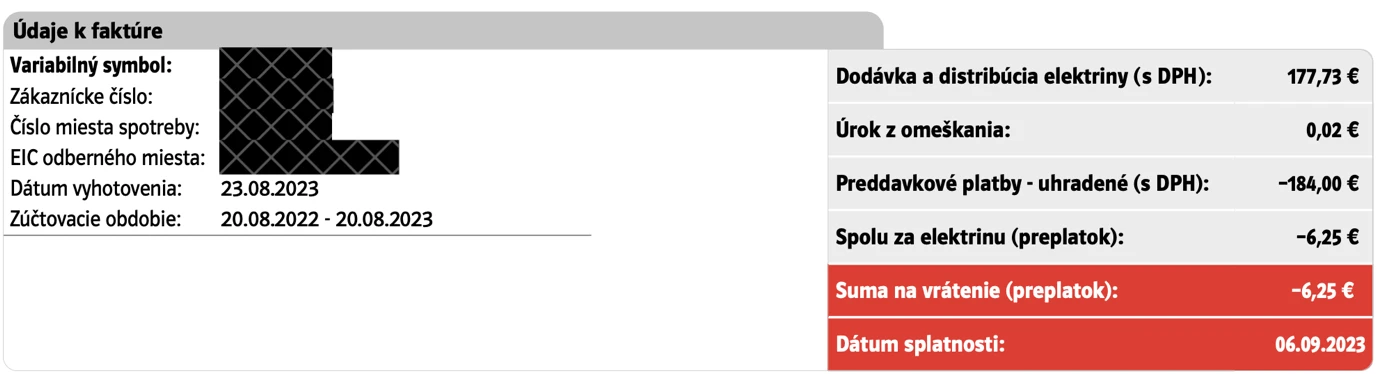
For the period August 2022 – August 2023, total consumption was 785 kWh and total costs were EUR 177.73. The price per kWh was EUR 0.226. Again, we're interested in 2022, so this time I multiply the price per kWh by the consumption in the period from 20 August 2022 to 31 December 2022, i.e. 298 kWh × EUR 0.226/kWh = EUR 67.40.
The total electricity costs I charged the tenant for 2022 came to EUR 169.80.
2. The tenant moved in during the year
If the tenant moved in during the year, the settlement is a bit more complicated. The first reason is that you need to calculate electricity and gas only for the months the tenant was actually in the flat. The second complication is the building manager's settlement, from which you have to separate out the water costs. Let's look at an example:
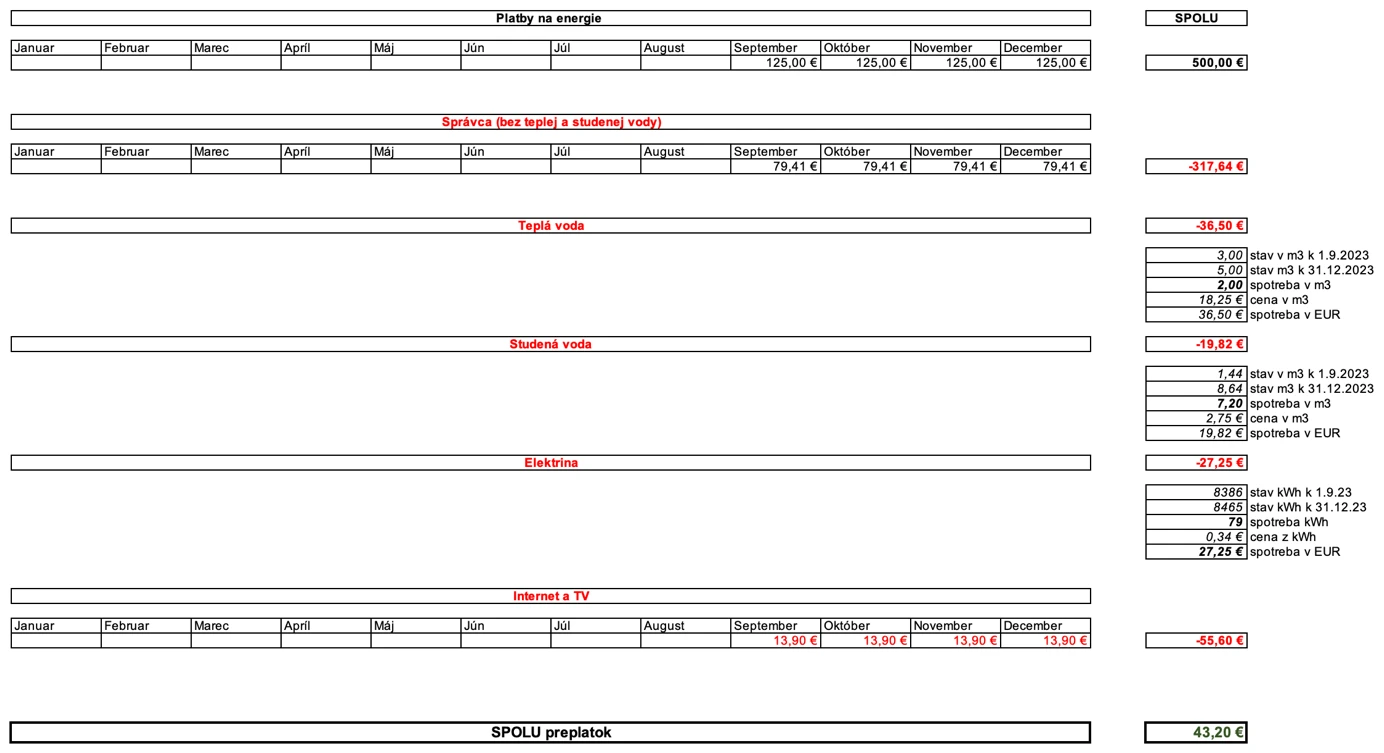
- Utility payments: In this example, the lease starts on 1 September 2023. That's why we receive advance payments for only 4 months of 2023, September to December.
- Building manager: First, we find out the total annual costs charged by the building manager. From these we deduct the total annual costs for hot and cold water. We divide the remaining building manager costs by 12 months – that gives us the monthly building manager cost (EUR 79.41 in the example). For 4 months, that comes to EUR 317.64 in total.
- Water: For both hot and cold water, you need to know the water meter reading when the flat was handed over (from the handover report), the water meter reading at the end of the year (which you also report to the building manager) and the billed price per m³ of water (from the building manager's settlement). In this example, the tenant used 7.2 m³ of cold water and the price per m³ is EUR 2.75, so the total cost is: 7.2 m³ × EUR 2.75/m³ = EUR 19.82.
- Electricity: We find the price per kWh of electricity just as in the first example. Then we determine the electricity meter reading on the date the flat was handed over (from the handover report) and the reading at the end of the year (your own reading, or obtained from the supplier). In the example, the tenant used 79 kWh and the price per kWh is EUR 0.34. The total cost is therefore: 79 kWh × EUR 0.34 = EUR 27.25.
- Internet and TV: In this example we pay the same amount for internet and TV every month.
As with any settlement, not everything about utilities is simple, and mistakes can happen. That's why we always give the tenant the table along with all the invoices to review, and wait for any factual comments. We always try to be fair, both to ourselves and to the tenant.
Finally, I'd just add that these examples are illustrative – every flat has its own specifics. In 90% of cases, though, they should work for you too. If by any chance they don't, you can use our Property Management service, which among other things also covers the annual settlement. If you'd rather handle the letting on your own, we'll be glad to help you with the settlement, for example through a consultation.